
Contactless Vital-Sign Monitoring with Ambient Wi-Fi Sensing
Continuous heart rate, breathing and sleep — plus hardware-verified bed-exit alerts — for elderly care rooms. No wearables, no cameras, no microphones.
Healthcare shouldn't depend on wearables.
Today's monitoring stack asks the most vulnerable patients to do the most work — and asks overstretched staff to fill every gap.
Wearables are forgotten
Bands and patches must be worn, charged and remembered. In real care environments, compliance decays until the data quietly stops.
Cameras compromise privacy
Optical monitoring turns bedrooms and wards into surveilled spaces. Families reject it; regulation is moving against it.
Manual monitoring is labor-intensive
Routine checks consume the majority of caregiver hours — while the events that matter happen between the rounds.
The caregiver shortage is growing
Ageing populations are outpacing care workforces worldwide. Every facility must do more with fewer people.
Meet PulsEye.
Room-scale ambient monitoring for elderly care. Compact wall units read the tiny disturbances a breathing, beating body makes in ambient Wi-Fi — tracking heart rate, breathing and sleep, and flagging bed-exit risk — with nothing worn and nothing watching.
- Contactless — no device ever touches the resident. Zero compliance burden, zero disruption.
- Privacy-first — no images, no audio. Only radio-signal patterns are processed, on-premises.
- Bed-exit alerts — a hardware-verified alert when a resident tries to rise, so staff can help before a fall.
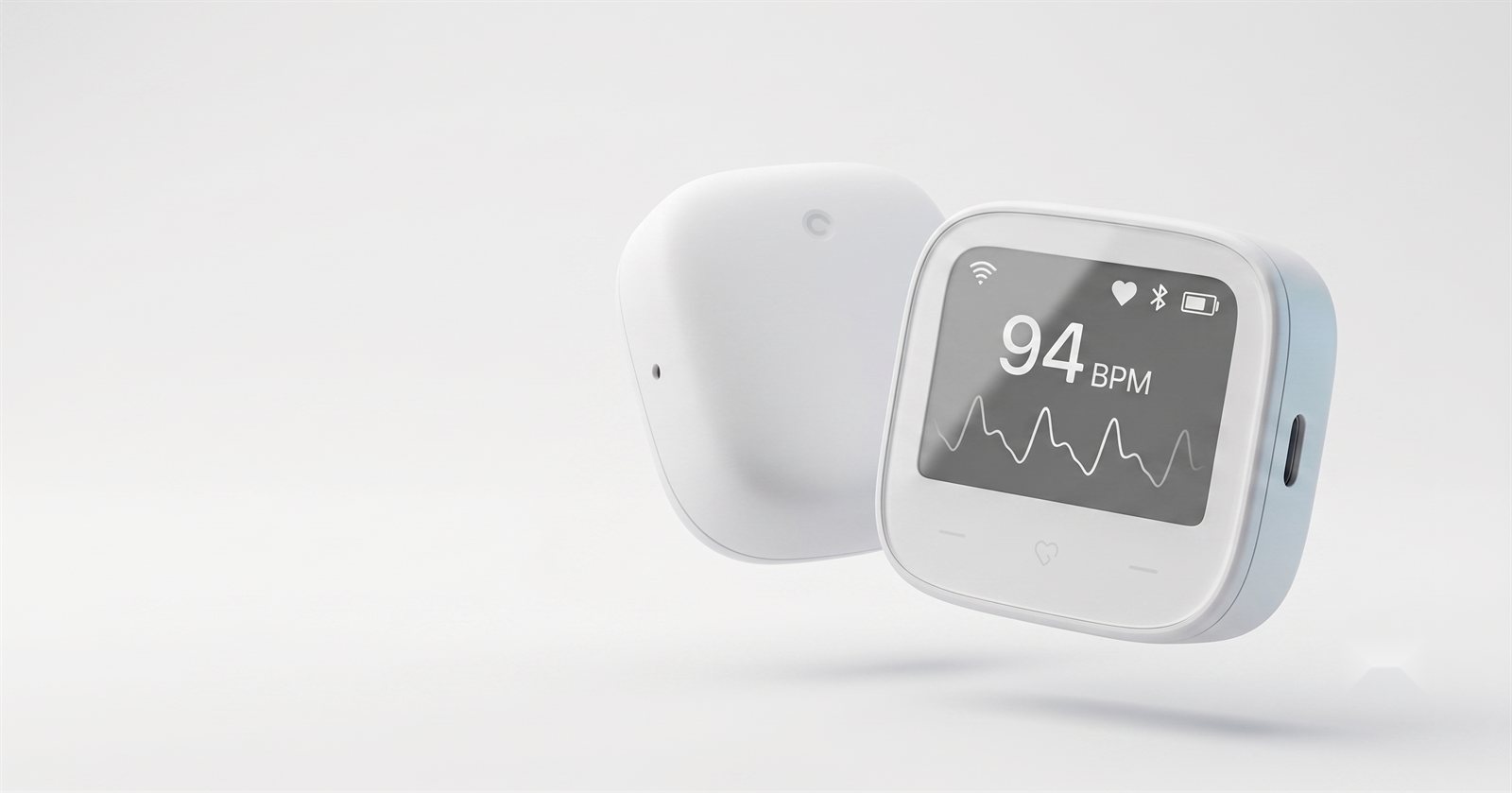
PulsEye — designed to disappear into the room.
Everything monitoring should be.
Nothing it shouldn't.
No Wearables
Nothing to wear, charge or remember. Monitoring that works even when the patient forgets it exists.
No Cameras
No optical sensors of any kind. Bedrooms stay bedrooms — dignity is a design constraint, not a feature.
AI Powered
Proprietary signal-processing and AI models turn microscopic wireless disturbances into physiological insight.
Privacy Preserving
Only radio-signal patterns are processed — no images, no audio, no biometrics, no individual identification.
Easy Deployment
Installs in minutes in any room. No cabling overhaul, no infrastructure changes, no training burden.
Patent Filed
The core Wi-Fi CSI sensing method is covered by a patent filed in India in November 2025 and published in 2026.
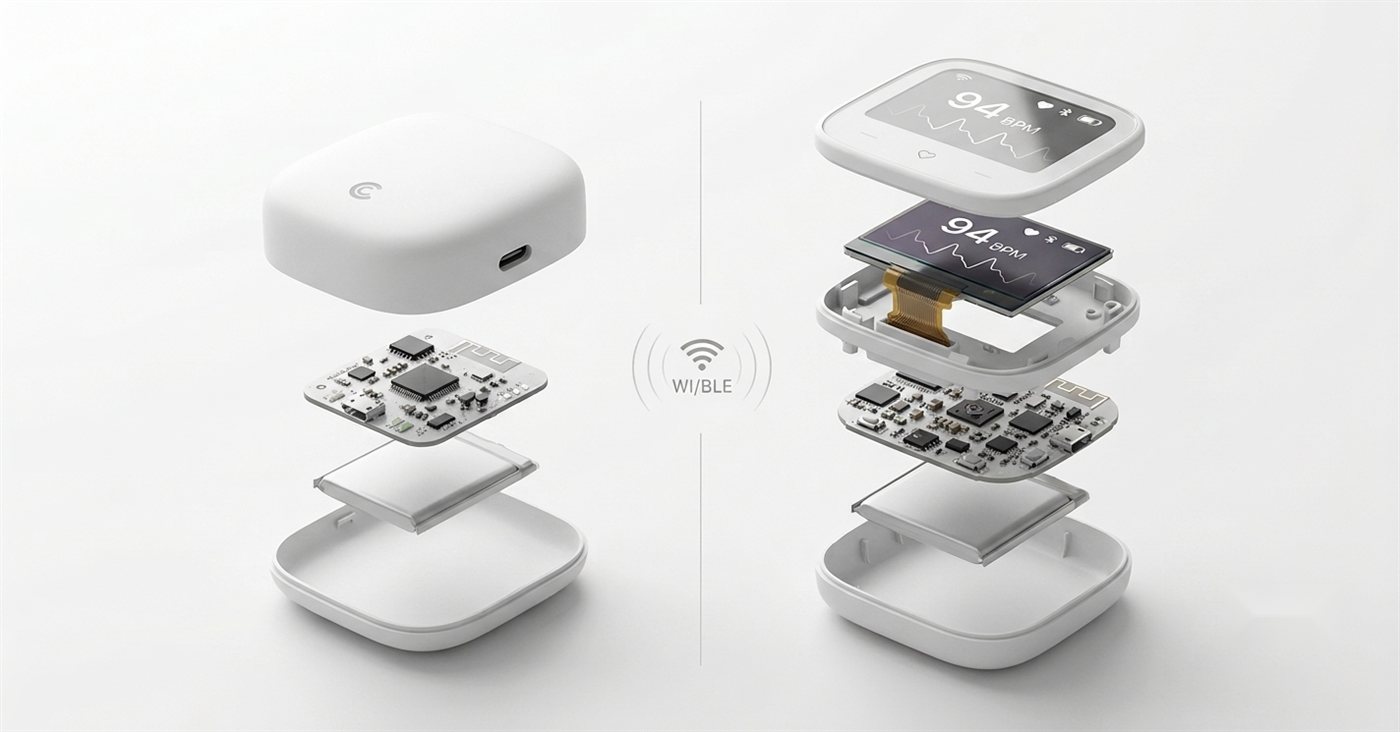
Exploded view — purpose-built sensing hardware.
Deep tech,
engineered end-to-end.
From custom sensing hardware to proprietary AI signal processing, the entire PulsEye stack is built in-house — and protected by filed IP. One platform, designed to carry every future ambient-monitoring capability.
Execution you can verify.
We build in public and document everything — every claim below links to its source on the Evidence page. Currently engaging venture investors across India, the United States and Europe.
Patent Filed & Published
Core Wi-Fi CSI sensing method — filed November 2025, published 2026.
TRL-6
Technology demonstrated in a relevant environment — prototype and MVP complete.
2 National Hackathon Wins (2025)
Including winner at IIT Bhubaneswar ReFlow 2025 — every win is source-linked on the Evidence page.
Startup Conclave 2025
Exhibited PulsEye at Startup Conclave 2025, i-Hub Gujarat.
Vibrant Gujarat Regional Summit 2025
Exhibited at the Vibrant Gujarat Regional Conference, North Gujarat.
Featured by YourStory (2026)
Spotlighted by YourStory — India's leading startup media platform.
Customer testimonials & pilot case studies
Structured pilot results and partner testimonials will be published here as deployments mature.